
Growing Hope for Monarchs
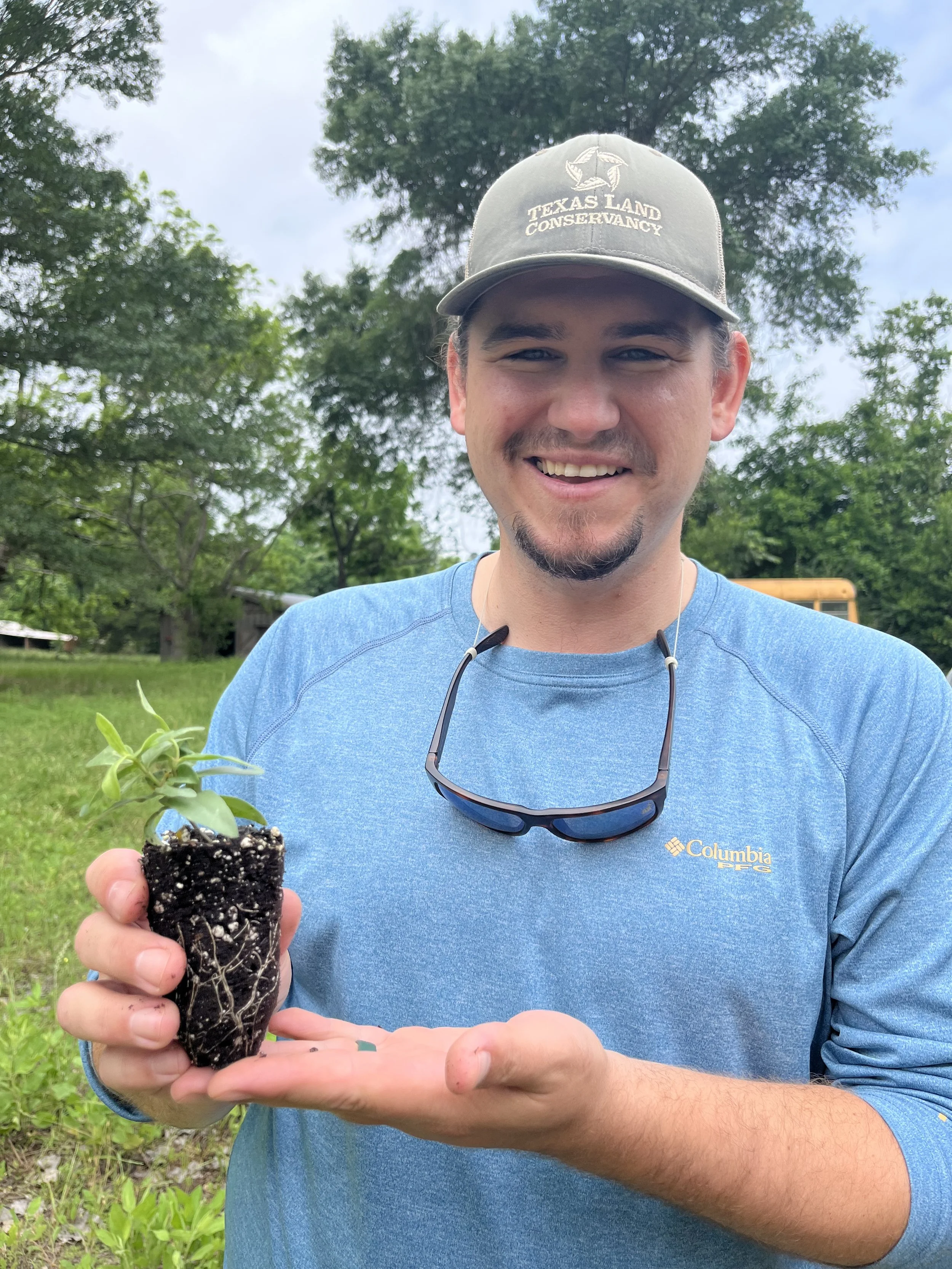
From left to right: Jack Cearley, TLC North Texas Program Director; Nick Romano, Habitat Select Nursery Director of Operations; Jamie Hooker, TLC East Texas Program Director; Daniela Parker, TLC Community Engagement Coordinator
Unpacking milkweed flats in the middle of the day at a TLC protected property, I could already picture the monarch butterflies that would someday benefit from this planting. Standing in the heat with dirt-covered gloves alongside coworkers equally soaked from the Texas sun, there was still an excitement that kept all of us moving from plug to plug. We knew rain was forecasted later that evening, and as we planted each milkweed plug into the dry ground, we crossed our fingers that the storm would come through and bring life to what we had just planted. These small milkweed plugs may not look like much now, but one day they could become part of something much bigger: a refuge along one of the most incredible migrations in North America.
With Texas serving as part of the annual monarch migration route, monarch butterflies travel thousands of miles from Canada and the northern United States to Mexico or coastal California to escape freezing winter temperatures they cannot survive. Along the way, they depend on healthy habitat to rest, feed, and reproduce. These milkweed plugs planted by hand at two TLC preserves have now become part of that migration story.
Like many butterflies, monarchs rely on a specific host plant for their larvae to survive. For monarchs, that plant is milkweed. Monarch caterpillars feed exclusively on milkweed, meaning without it, they cannot develop into butterflies. The availability of milkweed is so important that it even influences the monarch migration itself. As milkweed dies back in northern regions during winter, monarchs are forced to move south in search of suitable habitat and resources. Here in Texas, we get the unique opportunity to witness both the spring and fall monarch migrations.
As I planted these milkweed plugs into the ground, I kept thinking about how many generations of monarch butterflies will someday use these plants. Even though I may never personally see these plugs fully grow and flourish due to the distance of the preserves, the wildlife traveling through will. That is one of the most rewarding parts of conservation work: knowing the effort you put in today may continue benefiting wildlife long after you leave.
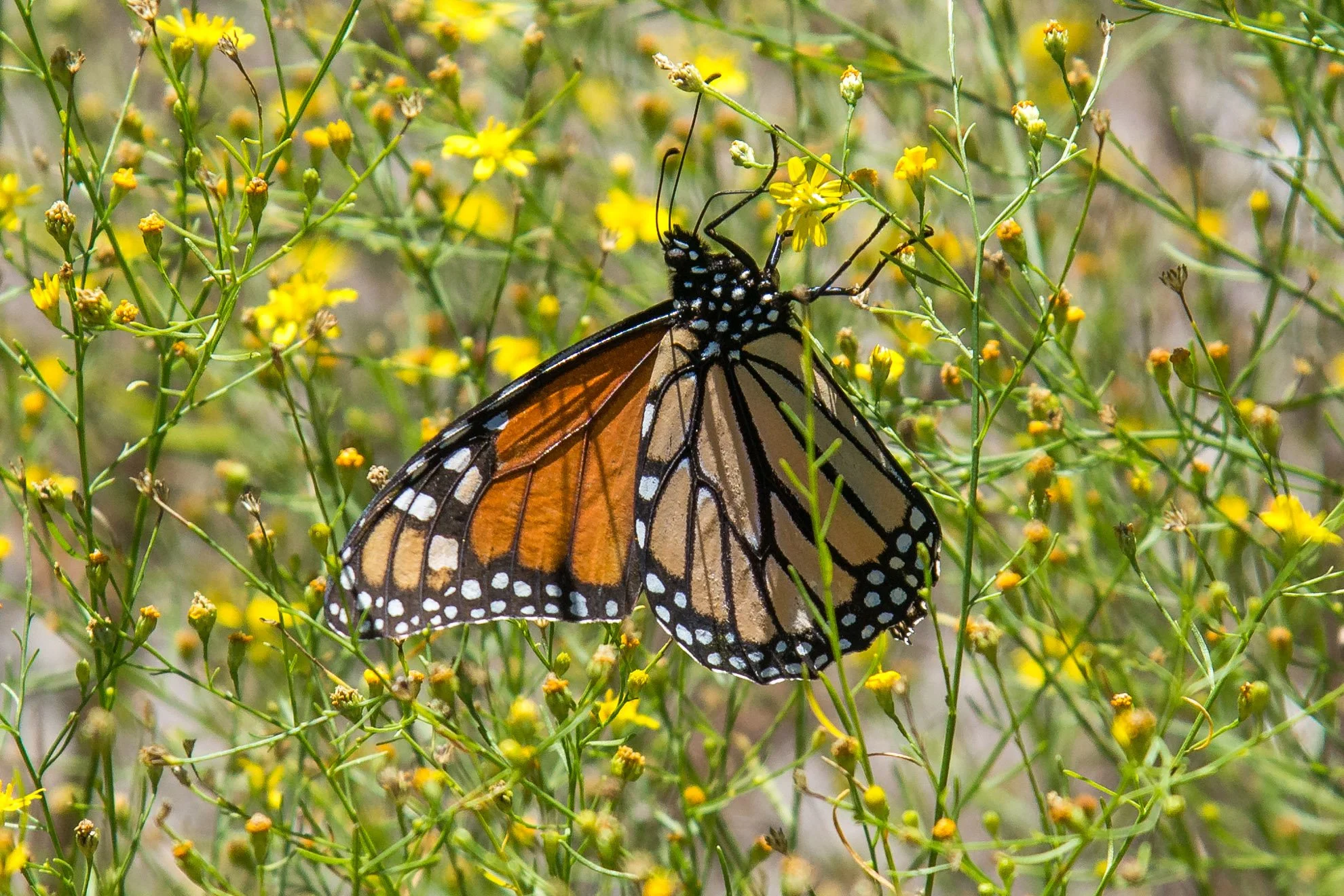
Photo by Stephen Ramirez
Why Monarchs Need Our Help
Despite their incredible migration, monarch butterflies are facing serious challenges. Habitat loss, widespread pesticide use, climate change, and the decline of native milkweed populations have all contributed to major population declines, with monarch numbers dropping an estimated 80–90% since the 1980s. The loss of milkweed, the only food source for monarch caterpillars, continues to be one of the biggest drivers behind this decline.
Protecting monarchs is about more than saving a single butterfly species. Monarchs play an important role as pollinators, provide a food source for other wildlife, and help indicate the overall health of ecosystems. Organizations like Monarch Watch, Monarch Joint Venture, and Native Plant Society of Texas continue working to support monarch conservation through education, grants, and habitat restoration efforts.
One of those efforts is Monarch Watch’s “Bring Back the Monarchs” program, which began in 2015 and has distributed more than one million free milkweed plants for monarch habitat restoration projects across the country. This past March, TLC received the incredible opportunity of being one of the recipients of the program.
Planting Native Habitat at TLC Preserves
We received 448 green milkweed (Asclepias viridis) plugs to plant at two of our preserves: Ivy Payne Preserve and Malone Preserve.
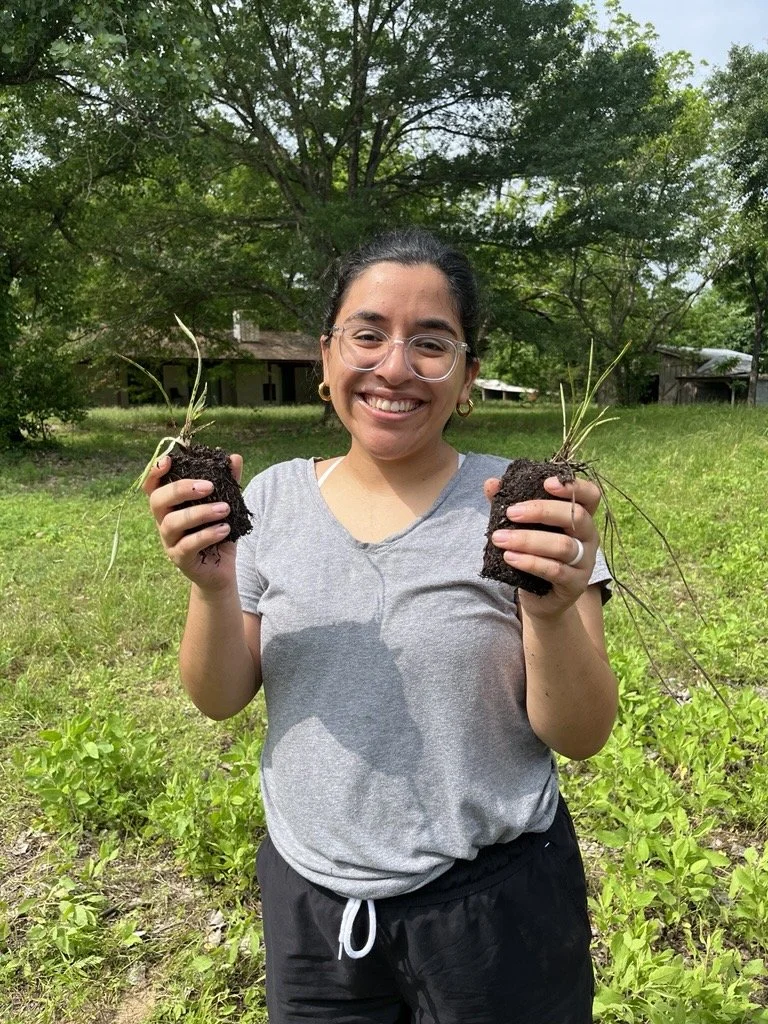
In late April, stewardship staff and I traveled to Ivy Payne Preserve, a 465-acre TLC preserve in East Texas, to plant 224 milkweed plugs alongside additional donated native plants including rattlesnake master and little bluestem from Habitat Select Nursery. A few weeks later, North Texas Program Director Jack, several volunteers, and I planted the remaining milkweed plugs and native grasses throughout Malone Preserve, a 145-acre TLC preserve in North Texas.
Spring was the perfect time to get these plants in the ground, allowing them time to establish before the Texas summer heat arrives. The timing also aligned with the monarch spring migration, when overwintering monarchs begin arriving from Mexico in search of emerging milkweed to lay their eggs before continuing north. Their offspring continue the migration, becoming the first of several generations that will repopulate much of the United States and southern Canada.
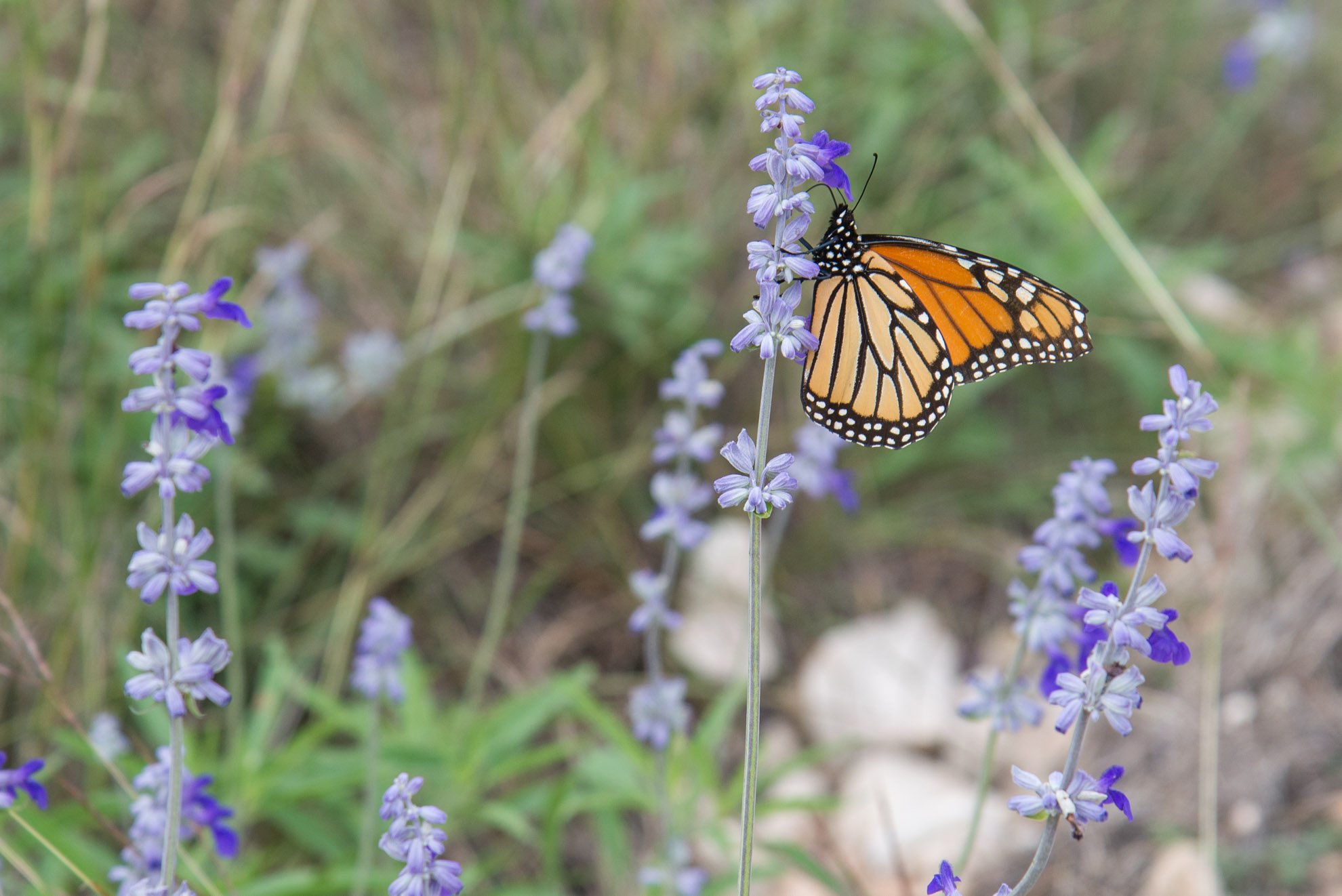
Photo by Stephen Ramirez
Looking Ahead
TLC is excited to have partnered with Monarch Watch on this project and help provide critical habitat and food sources for monarch butterflies. Planting native milkweed may seem like a small action, but projects like these become part of a much larger conservation story. A tiny milkweed plug planted by hand in a Texas preserve can support generations of monarch butterflies traveling thousands of miles across North America. It was a special experience to be part of these milkweed plantings and witness how restoration can begin with something so small, knowing the impact may continue long after the day we placed them in the ground.
Help protect more properties like these across the state!
Texas Land Conservancy could not do this important conservation work without our members, partners, and supporters. With your support, we can work with more landowners and protect more land across the state from the negative effects of land fragmentation and poorly-planned development.